Friday, July 25, 2014

Race on Race: a reflection of my error in using the African American experience...

Race relations are complicated even
between groups of color.
Talking about race, let alone presenting on it at a higher education conference, is a complicated and perpetual learning process. I don’t believe there is ever really a solid outcome to the journey. I think it continues throughout the entirety of our lives as our consciousness of it becomes more prevalent. I wanted to preface this piece with the understanding of such intricacy, yet it doesn’t excuse what I’m about to say. I made a mistake. I assumed, and I was not prepared.

A White former co-worker/friend and I presented on a theoretical framework I had been developing on the disruption of the normalizing tendency of Whiteness in traditional spaces of student leadership; in other words, a framework that could be applied to leadership offices in universities and colleges that would promote and sustain the desire for diversity and implement policy and practices to install it. Every presentation in Utah was a success with counselors being motivated to follow the framework according to their context and apply it with local educational institutions. In other words, it was a success!
Here we are in Chicago where the diversity of higher ed professionals is nothing like Utah. NOTHING! We are surrounded by Black, Asian, and Latino professionals everywhere. Our session was packed, over-packed! We began our presentation and followed it smoothly. People laughed, people took notes, they nodded, they smiled…etc. We broke our audience up into groups and had them dialogue using the worksheet we gave them and that too was a success. Afterwards, a number of people, Black, Brown, and White, came up to us and congratulated and thanked us for the presentation. It was awesome, and our heads were in the clouds…but like all powerful moments, a humbling is in order to bring balance—opposition in all things is some real shit.
A lady came afterwards later on and asked to speak with us for a minute. And being the already lofty sprits we were, we decided to welcome yet another round of compliments. Her demeanor was gentle but authoritative and she asked us, “I wanted to know why you used that clip in the beginning?”
This is where it hit me…
The clip was from the beginning scenes of The Butler. A film about a young African-American who served as a butler in the White House from the early years of Jim Crow to the election of Barack Obama. The film tracks the journey of the racial discourse through each era of race relations. The beginning scenes are set in a sharecropping farm with a cruel White master and his slaves working. The master grabs the  mother of the child-version of the butler and rapes her in a wooden shed where only the noise is heard. He then walks out amongst his slaves where the father of the butler protests and is shot in the head. No blood is shown, but the scene is still a disturbing one—I get it, why would I show such a thing in a professional conference?
Our intention was to magnify the power of context and experiential learning in the process of how one carries out their lives. The butler had always been hesitant of the civil rights and Black power movements, but at the end—which we showed as well—it depicted him joining his son at a protest for Nelson Mandela, something quite powerful as the butler engaged a new form of resistance and came to a much broader and radical consciousness. I shared with this woman—who was also Black—and she said she understood, but did not appreciate the clip and was upset that we showed it.
The romantic idealization of me as an awesome trainer on diversity in education, was broken…and my pride laid there in shambles—that’s what too much praise will do to you—and with a humbled heart, I began to listen.
Sometimes I think this phrase is
appropriate and other times
I don't. It's problematic, that's for
sure...
She said that we could not understand her feelings because we were not Black ourselves, nor of the African American experience. She is completely right. She mentioned that those kinds of images, that kind of tone and feeling that the film presented, shares a dark moment in history, something not to be exploited for a training on diversity where it will most likely not be truly understood or talked about; it needed deconstruction and a libratory dialogue where emotions could be dealt with and history contemplated, not overlooked. It’s horror is sometimes too much, because in some places things like this have not stopped. Nor has it’s racist attitude diminished, it has simply transformed into another vehicle—i.e. the prison system.
She ended her words with, “I hope you take this in the way that I’m telling this to you,” which was an incredibly gentle and soft manner, not angry just disappointed and somewhat sad. “Completely,” I responded, “and thank you, thank you so much for saying this, for having the courage to approach us and offer your words, thank you so much. I am learning, I think we all are, and your words will never be forgotten.” She smiled and I could only be disgusted with myself. Yes it was only her opinion, but I began to remember how a few of the older Black audience members also left after the clip and I could only regret showing the clip in the first place, regardless of my intention.
She mentioned the age difference, because a lot of the younger, not all, just some, Black professionals talked with us afterwards and applauded our presentation. Sometimes generational experiences differ, and sometimes they don’t, but that really isn’t important because I’m sure there were younger Black audience members that felt the same way.
The perfect example of the contradiction and tension of
race within the Latino umbrella. The young man is holding
a sign that says "I am Dominican too" in protest of the D.R.'s
new immigration policy on the deportation and stripping
of citizenship of anyone with Haitian ancestry. Global critique
has looked at this as a race-based issue against Black people
in the Dominican Republic.
She also said that we COULDN’T show such a scene in this context because we weren’t Black. Some people might get offended at this or become really defensive. I am not one of those people and I didn’t feel that way at all. I agreed with her. It is insanely problematic to show such images and continue with my presentation as if it did not affect me. OF COURSE IT AFFECTED HER! THIS HAPPENED TO HER PEOPLE FOR HUNDREDS OF YEARS! She wasn’t just seeing a fake scene of a Black actor get shot in the head, she was RELIVING that same oppression and violence!   
I cannot speak to the African-American experience and because of that I do not have a racialized knowledge about how to approach these things, and I typically do not have the right (the Black experience in my opinion is different than the African American experience because the term Black would include the Diaspora at large which includes many Afro descended identities and the many contexts that accompany them; the African American experience is a tragically unique experience in the history of race relations, Dominicans and Afro Brazilians may not be able to relate exactly but can adopt their racial politics). Because I cannot speak to the Black or African American experience—and this is important now so read carefully—I have to notice their racial realities are practically unknown to me and that I can pass through society without ever acknowledging their truths, and be perfectly fine.
Another moment of tension. Many Latinos offered
their voting power to President Obama in
support of immigration reform that supported
undocumented immigrants. Instead, his administration
is accused of record-high deportations, the
highest in decades.
 
In some ways, I can pass for White—an Eastern European White, Italian or Greek…etc. This helps me and grants me a certain level of privilege in society—not a lot but enough to get by. That privilege allows me to ignore any Black reality and still get ahead in society; like completely disregard it, and be just fine in the end. That’s the problem. I’ll go so far as to say that a lot of us Mesti@ Latinos ought to follow caution in this regard. We as a group, stand in danger of homogenizing the hybrid in our racial nature and having that become a dominant narrative, alienating both the Black and Indigenous experience—Rosa Clemente’s One-Third argument.  If you don’t believe it? Look at how many college campuses would rather focus on engaging the “Latino” population versus any of the other groups of color. This silences the narratives of too many of our brothers and sisters of color; these are narratives that may not have the population numbers to back them up in a board room discussing outreach and cost effectiveness. But we are not an investment, especially for or by any institution! This kind of discourse takes away from any attempt at solidarity, coalition or decolonization. They pit us against each other; divide us and leave the scraps for us to fight over them. These are distractions, and they are deadly ones if we are ever to be honest with each other about race relations in the U.S..  
What many people don't realize is that
there are many moments in U.S. history
 where Black and Brown communities
resisted together in solidarity. As early
as European contact, African and
Indigenous peoples set up rebellions
and even created their own communities.
During the Black and Brown Power
Movements, Brown Berets and Black
Panthers often worked together.
 
I will never forget her words. They made me reflect my privilege in a very profound way. I never like to say which group has it harder, but I think it’s important for us to check and challenge the way EACH of us thinks about each other. If she showed a film clip about violence perpetuated on a Latin American immigrant, I would get upset as well. There are certain things that we ought to think about before we act, and every process we encounter ought to be cognizant of the many oppressed realities that exist within our context. To avoid or discount them, is to participate in the erasure and exploitation of a group narrative. Talking about race and ethnicity is a difficult and complex process. It is a world filled with intersections across race, ethnicity, gender and sexuality. There is no easy way. It wasn’t meant to be. It was meant to act as a dividing force and to unlearn our colonization is hard, but doable. So continue challenging yourself. Continue learning and unlearning. Continue to listen, and take criticism when it’s given with love and with the intent to teach and share knowledge. Continue to resist mainstream ways of thinking; they will enslave you. Continue to make mistakes and continue to endure. The path to peace is a complex one as well as ongoing, but it is truly worthwhile and beautiful in the end.  
Always Learning Truths,
TINO


Saturday, July 5, 2014

Chicano NewYorquino & the Rise of OtHeR SeLvEs in our "Latino" Community

Identifying as Chicano is a choice, and one that has produced a sense of homeland, despite my not being of Mexican descent. I am the son of Honduran and Ecuadorian parents. What that exactly means? I honestly have no idea. I love pupusas and have learned about a regional Honduran context, local Garifuna and Maya histories, and not too much more from my Ecuadorian side except that we run off of Spanish bloodlines and a Nacza lineage—mind you this is powerful in itself, but I just didn’t feel connected. Not much more to it, although there could be I’m sure if I took the time. But I found something else that spoke to my struggle, that adopted me and rooted me in something, in somewhere. I am Chicano…

However according to mainstream Chican@ discourse being born of Centro and Sur American parents and raised under Caribbean urban influences in the East coast, really doesn’t qualify entry to the Southwestern borderland identity—I got to bleed Mexico in some fashion or another apparently. Whenever asked what I am or what I identify as, I mention my parents then that I identify as Chicano, but I’m scrutinized carefully and then told I can’t because I’m not a Mexican born and raised here. Whatever…fragmented, I guess is the best way to describe myself.

I came from one of the most diverse cities in the states, yet I felt that I could not classify myself. The term Latino proved to be hollow in defining who I was. I did not speak Spanish well, and Latinos from Latin America all called me Gringo. In other words, I was rejected. I could not claim their identity, nor their space, because I was not of them. Gringos/White people did not claim me either. White people would ask me where I was from, I stated NY but then they responded jokingly, “No, like where are you really from.” As if who I was had to be construed as foreign. Why did I have to be a stranger to this country?

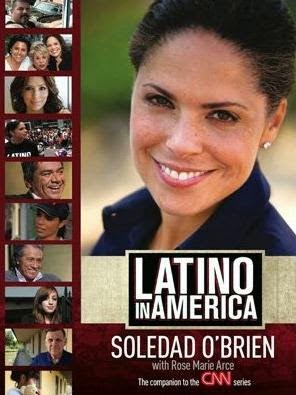
I came in contact with the term Chicano in Utah through a book by Soledad O’Brian. Soledad described her experience as a journey webbed in social identities and opposing messages. She needed a label, but was surrounded by categories that had vied for her attention and fought for ownership. For the first time ever, I felt I had read something that spoke to what I was feeling, to what I felt haunted me my whole life—I believe Soledad had one hell of a journey too because her parents were Irish and Afro Cuban.

After Soledad I pick up on the term Chicano when I met other Latinos—specifically Mexican-American—who were not from Mexico but purposely re-identified themselves as from neither here nor there. I was amazed. This is what I felt, and they called themselves Chicanos. They seemed at peace with themselves, regardless of how often they defended their titles against Latin Americans. I began to search myself. Chicano authors like Corky Gonzalez, Sandra Cisneros and Rudolfo Anaya began to fill the void that broke me, fragmented me, and in their words I felt whole. In their words I discovered the middle ground, the separation of worlds and merging of perspectives, of occupying a mental state that was only intensified by a real-time geography experience.

I finally picked up Anzaldua—a Chican@ must-read—and never had someone’s words stimulate both body and spirit. Her writing was beckoning me to come home. Where? That was the thing, it wasn’t a real place I had to choose from; it was a space I could dictate and define according to my terms. The Borderlands. Anzaldua touched my heart and fulfilled me: “Until I am free to write bilingually and to switch codes without having always to translate, while I still have to speak English or Spanish when I would rather speak Spanglish, and as long as I have to accommodate the English speakers rather than having them accommodate me, my tongue will be illegitimate. I will no longer be made to feel ashamed of existing. I will have my voice: Indian, Spanish, white. I will have my serpent's tongue - my woman's voice, my sexual voice, my poet's voice. I will overcome the tradition of silence…I want the freedom to carve and chisel my own face, to staunch the bleeding with ashes, to fashion my own gods out of my entrails...” 

In mentioning Anzaluda, I have to be honest in that her literature very much represents the intersecting nuances of gender and sexuality at the same time as race. To withhold that information would fall on account of my privilege as male, and heterosexuality as a normative feature of society. Yet these additive features to identity—although I could not relate to and rightfully so—taught me so much more of the intricacy within the social constructs of self, and the power in disrupting categories by naming your own spaces. At the time, this was my gospel.

So I decided that I identify as Chicano. Why not? If race and identity is socially constructed, who are you to tell me where I belong and to who? The difficulty now is helping other Chicanos—specically Mexican-American Chicanos—come to terms with the fact that I too can identify as Chicano. Sadly, most Latinos and Chicanos have a very misunderstood and lacking conception of the term itself. Welcome to colonial imperialism 101.

Historically Chicano derives from the transculturation of Spanish and Indigenous language in Central Mexico originating in the conquest. One version contests that the origin of the term grew from the evolution of language in which Mestizos or Indigenous Mexicans came to be known as considering the real pronunciation of the Azteca people—the Mexica (the X being pronounced as a “sh” or “ch”). So one argument is the resulting cocktail of language that is used as a derogatory term to affiliate individuals who could not exactly adopt both worlds (Indigenous or European) or those who lived in the Northern lands till Mexico and the Western half of the United States were coerced as an imperialist strategy. This is one version and there are many.

But as we soak in the literature of the Chicano movement from the Civil Rights era and look at the anti-colonial aspect of what it’s formed into—a very anti-assimilationist project—we see resistance as a prevailing theme for what Chican@ truly signifies. Yes it might be a creative exchange of Spanish and Indigenous languages, but it is also the re-appropriation of resistance for a group who really had/has no home. It demands self-determination and representation. It seeks voice. That’s why the term speaks to me.

But what about the African or Black experience of Latin America? Does my identity not encompass that portion? Culturally? Racially? Yes. It does. 

Honduras and Ecuador are home to Afro-Latino demographics and to deny them as part of my reality would be disappearing them from a larger framework—this is how an entire people fade; their stories are never told.  Neither is this process new. Just like the Indigenous struggle of identity and representation, the members of the African diaspora in Latin America face an equally oppressive challenge.  No one wants to identify as Black…Colonialism part II—Mexico also had 4X as many African slaves delivered to their shores than the United States, FOUR TIMES as many, which suggests Mexico is just as much Black as it is Indigenous or European (you see, entire histories disappear)…

Mad love and respect to Juan Ernesto
(Tan shirt on the right) who passed
away. You're still in our memories
hermano...Rest in power...
I identify as Chicano but I can’t dissolve the Black experience of my identity, of the afros my dad’s side of the family dons naturally, of the cultural and racial salience my wife adds to the mix from the Dominican Republic, and the fact that my personal and familial community is now very Afro Latino. All of this adds to a complicated discourse on identity.

Nevertheless, as I seek to untangle and not fragment, but keep whole, I come to realize that there is true danger in the complexity that I’ve arrived at. Rose Clemente critiques the neutrality of the 1/3 argument, which is so contagious in the Caribbean—I am 1/3 Indigenous, 1/3 African, and 1/3 European. Contradictory to its own nature, hybridity results in the dominance and expression of ones identity, the colonizers’. This hides the racialized component of systemic oppression in one body. They will not see three in one, but only one; and it will be the most European, the most Western, the most White, and the most male. Politically this is a disadvantage.

Therefore, I identify as Chicano as a politically empowered front, but I take it a step further than that. I do what Junot Diaz does, I carry from the Caribbean and I introduce my other hidden selves by challenge through creation. I add my home geography because place and space are critical in this development, and I contribute with a contextualized Black experience of the Afro Caribbean. In other words, I arrive at my own etymology, my own conception of the borderlands and ocean gulfs: I am Chicano Newyorquino.

So let me make myself whole again, let me reintroduce the assorted voices into my one body, and by extension the knowledge I wish to share with my son one day. I’ve created the Chicano Newyorquino to withdraw from a Western categorization and deliver an alternative, something that speaks to my racial politics of adopting Atzlan as homeland, of resistance as dance and Santeria, of occupying, of disrupting, of transcending, of loving because my Brooklyn experience is all of this!…BUT…I say this with the understanding that a radical racial politics must also arrive for Centro Americano identities and Sur Americano bodies, LIKE ME! We can’t leave these folks hanging and expect that our alternative discourses naturally fit them or just plain old exclude them; yet they will have to define the parameters of their own philosophy—no one else should. It will be an in-depth and long project of race and decolonization. It begins ,and should be encouraged—not stifled—by all of us. In fact, it is beginning though with the heavy entrance of Central American youth into the United States from the frontera. People are beginning to realize that countries like Guatemala, El Salvador and Honduras actually exist!

We as the mixed bodies of Latino parents now have an obligation to set up new spaces and disrupt current categories that would seek to label us. We must find the power to name ourselves and self-determine our bodies. If we feel like we fit into a current discourse, then let’s disrupt that shit! No one else should be doing this for us; not Chican@’s, not Boriquas, ni los Dominicanos, or other “Latinos”, and especially not White people. We must find a new means of existing and knowing—that we can do such a thing and in no one else’s shadow—or we risk our own narratives, and in the process…ourselves.

Tino

Note: I apologize for not adding references. If you'd like to know them please email me at Tinouvu@gmail.com 
I also feel that I did not explain enough about why we need a radical racial politics, why it's even necessary at all. Nor did I feel I provided a well enough application for Chicano to me. I hope you can forgive, but I just hashed it out and needed it out ASAP. One more thing, I want to acknowledge that my Honduran and Ecuadorean heritage have not disappeared. It's something I wish to search out better and understand more of. But I'd like to do this process with my son, and not by myself one day...


Sunday, June 22, 2014

The Welcoming and Betrayal of a Post Racial Society - Opposite or Same Gender Attraction & Racism...

I’ll start by making a somewhat satirical statement about race in our current society: I hereby classify this suggested post-racial society as “Color-blind”; that not one of us sees color, or at least we shouldn’t. WE are all human beings. I do not see a person for their race; therefore, I see them as a PERSON. Right…

This is accurate in that one may see another as a person. Of course. But something else is completely inaccurate in this statement and it is that one does not notice the race of another specific individual, or shouldn’t. In reality, a person is not seen, rather a person of COLOR is always acknowledged; whether you like to or not, this always happens.

The truth is that race is a vivid and explicit theme, you will see race because you cannot avoid it, again whether you like to or not. After race is registered into the mental faculties it is then processed and channeled through to realize and express specific emotions or feelings about ones race through a filtering of the discourses or messages that society has carefully installed into you to address other messages about a racial character. In other words, society will tell you what to think about ones race when you see someone who is of a non-white race—how to react to them, how to treat them, what to say to them…etc…

To be honest with you, it’s because white is normal. It’s okay. In fact, it’s so AWESOME that people all around the globe strive to be white—please note the sarcasm because that’s important. Parents all over the globe are overjoyed when their son or daughter has “advanced the race” by breeding with a white person, because their grand-babies receive those ‘AWESOMELY’ normal but highly prized attributes: blue or green eyes, blonde STRAIGHT—hair if you’re lucky—and that awesome white, but not pale skin. If not, well then you’re the Black sheep…literally.

You may think otherwise. It’s okay. For you, especially if you’re white, you’re thinking I—me the author—am dwelling on the past. I’m picking a fight or advancing a reverse racist cause with no real purpose, just to receive reaction and looking for an argument that has no merit because us ‘colored folk’ receive all the benefits of today anyway. Sometimes I wish you were right, but none of this is even close to true.

Firstly, the fact that you’re upset and want, no…NEED, to challenge this only indicates what I state, white is normalized and you can’t help but claim that such is not true because I’m being RACIST, and because there is no such thing as race…dang it, we are all humans and why don’t I just look at the world that way!

I can admit to carrying racist prejudices, that’s because we all do. I’m not being racist to you—if you’re white—because this one individual act does not account for a system-wide approach that pins an entire people down that are not white. This is called racism. There’s a bigger picture involved. You also probably think that race does not, should not exist, or be a factor in this conversation…but the fact that you’re upset implies the contrary.

You can’t help but challenge what I’m telling you, that whiteness is normalized, because all of a sudden you’re not normal anymore! You’re different…? (drag that out…and then pause)…

----

I’ll ask several of my white straight guy friends or white Lesbian friends, about a woman we see passing by or hanging out at certain spot. Why have I pointed her out? She’s attractive, and I’m inquiring about whether or not the person I’m with agrees--mind you, most of these people believe that we have superseded race in America or feel that they are not racist at all.

What does this have to do with anything I’m writing about? Everything…

So I inquire, and oftentimes to my personal shock—but mostly not really—they’ll totally disagree or act disgusted and say: “I’m not about Asian girls…Black girls…Hispanic girls...Poly girls…”

Really…?

Hold up. Do you see what just happened? Rewind.

There is no such thing as race right? And if there’s no such thing as race, we don’t necessarily judge because of race or we shouldn’t because that’s wrong? We don’t turn away or permit entry into our circle of love based on race? Particularly in relationships to each other?...Right?

So why would a non-white girl not be your “thing”? Why can't I just look at a woman for her beauty and simply be attracted to her regardless for her race? Better yet, because I believe in and acknowledge race, I notice that there is a contextually designed beauty to every female body of every race and I consider that in my account of what makes someone attractive. Therefore I find many different women from many different races to be beautiful, because they do not have to LOOK white or carry caucasian features to be considered attractive. They’re gorgeous in their own right. 

BY THE WAY...

Just to be clear, the same thing happens when you flip gender roles. The same occurs with the various interpretations of sexuality and who someone would be attracted to. It becomes complicated with gender and sexuality and really needs more discussion by itself, but I won't stress because I'm speaking to a particular experience; nevertheless, those issues do need attention as well...  

My friends who say these things are not outright racists. In fact, it’s hard to kind of find hardcore racists nowadays. There just average people leading average lives. Good folks actually. This doesn’t change their racism.

I have literally dated a girl from every race and ethnicity, and each one I have found beautiful according to my appreciation of beauty within a racialized context. I didn’t like a Black girl because she looked white, light-skinned or portrayed white facial bone structures. I liked her because she was Black; because there’s a lot more to Black besides the amount of melanin contained in your dermis (layers of skin), because there is something incredibly rich and fresh in Black skin, kinky hair or full lips. I won’t go into detail for each racial group because it’s unnecessary. I’ll leave your hopeful appreciation of diversity to the rest. By the way, this doesn’t mean that white isn’t beautiful, because it very much is—that’s been normalized—but so is everything else!

In the end, I married a beautiful Afro Latina who I would say looks Mulatta (mix between White and Black) but carries mostly Black African physical and cultural attributes. Yes I was attracted to her physically, but I was also attracted to the cultural aspect of who she was. I envied her strength as a Black woman; I saw power in the knowledge she could pass down to our children; I loved the way she danced to our Spanish and Yoruba songs, and most importantly, her body drove me nuts! But I love her! And of course I love her as a human being—I didn’t marry some quadruped creature—but I am willing to acknowledge her race as beautiful, because there is something very humane about it. Humanity is the assorted races that exist. It is replete with the color-tones and phenotypic features that we have all limited ourselves to in the name of a social categorization that lacks justification in our society and much less within our mind-frames.

Why am I writing this? Because by acknowledging and coming to terms with race, even whiteness—as a normalized discourse (societal message/condition)—we are stepping in the right direction. We aren’t hiding behind the elephant in the corner. The more vulnerable we are with racialized constructs, then the more honest we can be with each other. If you don’t think someone is attractive based on your racialized beauty scale, that’s okay. I don’t like it, and I think you’re limiting yourself in the most insane way, but it’s okay, as long as you can equally accept that race is real, that color matters, and that quite frankly, you might be racist because of your judgment. It’s okay. Again, you’ve been pretty much molded from birth about what to think about a specific kind of person and their racial group. Your job now, would be to unlearn these racist tendencies and adopt alternative ways of understanding race.

Open your eyes concerning beauty among the various racial and ethnic groups that exist, and do not dwell on something that’s been appropriated to be non-white and beautiful but is actually emulating White facial or racial features to be deemed as attractive. I’m talking about an actual racialized conception of beauty, something contextual yet applicable to all humanity. Understanding this actually places us in the route where an honest and authentic post-racial society can exist; where we don’t judge the potential for relationships and love based on ill-manifested racialized conditions.

However, I truthfully don’t believe that such a society, a post-racial one where we all get along happily regardless of what color or race we are/identify as, would actually be possible. Western society just isn’t manufactured that way. It never has been, nor will it ever be. There are too many powerful stakeholders that would do anything to make sure that such would never happen; even if the majority of the population were to be of color, or so mixed that you couldn’t even tell. A powerful and racist minority is still very possible, and in some ways that’s already present today. This message, if you even want to call it that, isn’t just for white people, it’s also for our communities of color in the effort that they shed colonial prejudices and begin to adopt a new lens to their own racial identities, their own beauty; because if you cannot begin with a positive manifestation of a self-beauty then nothing else survives unless it is what mainstream thought tells you, that white-only is beautiful.

So look at yourself. Look at others. Look at race, and look at races. Notice carefully. Never be deficit, especially to a group that is not your own, and watch and learn. Understand that race is real. That it will never go away; and at the same time, confront the fact that you might not like someone based upon their race, and that it is racist. Accept it. Own it. Then challenge it. Work around it. Open yourself up. Be vulnerable and let the world share itself with you. You’ll find that there is much you didn’t know, much you now know and much you will know. Always be safe and always appreciate, never hate…Peace      

(ii: In this piece I use the word You or We, sometimes I, a lot. I leave it up to the reader but when I write “You” I generally am referring to a white person or someone of color who identifies with whiteness. “We” being people of color or all of humanity, and “I” being me, the author.)


Monday, June 9, 2014

To Speak Spanish or Not…? An Argument between two Non-Native Speakers


When my parents came over, I wasn’t expecting for the following to ensue: my pops and wife to be arguing over what language ought to be spoken in OUR home, and taught to Luca, OUR son, nuestro hijo. At first the visit was typical. My mamita dropping off food and the abuelos getting to know their grandson. Typical.

But my dad said something in English to his grandson, and my wife responded jokingly, “en este casa, hablamos espanol! Jaja, Luca no entiende ingles [in this house we speak Spanish! Luca doesn’t understand English]. We [my mamita and I] laughed. My dad with a smile responded, “Yina, you know when Tino was 5 or 6 years old his teacher came to us and yelled at us because he didn’t speak any English. She said, ‘Mr. Diaz do you know where your boy is heading if he doesn’t learn English? Nowhere!’ I believe she was right. It would have been confusing for him. I didn’t want him growing up with an accent. I didn’t want him being discriminated. I didn’t want people hating him because of how he sounded. She was Puerto Rican too.” Mamita adds, “Peor que sea Latina tambien” [she just had to be Latina too]—my Mom was always opposed to and never followed our English-only household policy.   

Instantly, my wife and father go at it--when I say go at it, I mean the culturally relevant notion that WE as Caribbean Latinos associate the meaning of an argument, LOUD but not angry, and if angry not that Western kinda' angry. My father defends his nativist strategy for survival on behalf of his two-generations down posterity; my wife, responding with her own ESL experiences and unloading about 4 semesters worth of graduate work with English Language Learner research and study.  The point that struck me in their argument, with my mamita in the corner spurring on my wife and shouting a “Si” and “Mira,” backing my wife up, was when my wife said “And look at your son, a man who looks Latino but can’t speak like one. A man who wishes more than anything to communicate with his own people, but feels like he can’t!”

It stunned me…

There was a moment of silence before they further explored the many-nuanced subject of language acquisition and identity. She was so right that it hurt. It wasn’t intentional, of course. It was more out of love than accusation; more out of experiential warning than blame. It was the love of a parent and spouse that understood the past injustice of language and racism, nativism and education, and wanted her son equipped for these same struggles, not ill-prepared.

I supported my wife on this one. I had to. It isn’t just that traditional spousal agreement that we non-verbally consent to—to back up each other’s debates. But what she said hurt because it was true. Language for me had always been an issue. I never truly felt “Latino” because I never spoke like a “Latino,” I never spoke Spanish. When I was/am given the opportunity to speak I usually freeze up. I get nervous. My words leave or I stutter, and words repeat themselves in 3 to 7 cycles. As I talk, these same words feel like weights, each pronunciation like a 45 lb. steel-plate dampening the chords of my identity.

I’m somewhat good now, pretty good. What did it take? A lot of listening and shame-filled practice. It’s all good. It had to be that way. It used to make me so angry—still does—whenever Mormon missionaries at the Spanish congregations in Church I’d attend scoff when I would respond in English to them. They said, “Haha, hermano solamente hablamos espanol aqui.” “Screw you” I used to think. Screw all of you. Whiteboys that think they know my own language better than I do—but they did, and that’s the hard part—and comfortable, sometimes in jest when they err with  no critique: “Elder, esta bien” they would all say, comforting the Elder or Sister missionary that made a mistake, “aprender otro idioma es dificil.” When I make a mistake, in my own language critiqued by my own community, I am the welcomed recipient of perplexed looks and sympathetic but poetically disguised pats on the shoulder. No words.

 
But you have to understand the position my dad comes from. You see there’s a context to why he feels the Uncle Tom way he does. My mamita came to this country in her early 20’s. My dad came in the beginning of his high school years to Brooklyn, NY from La Ceiba, Honduras. In high school he was surrounded by young Black and Puerto Rican bodies that did not speak Spanish and that terrorized him because that was all he knew. His barrio slaughtered him. Roughed him up and created that tiny stick of terror that I now know as Dad. Homie, literally grew up in the school of Hardknocks and graduated. My mom once told me about a group of Italian dudes that chased him all the way home screaming racial slurs because they heard him talking on the phone as he walked back from work, I was at home and barely born. So I understood why he said these things, why he believed them. There was context and I can’t hide or ignore that. It’s often the reason why our people—and I use the term “OUR” loosely because I don’t believe in essentialized configurations—are wedged in colonial constructs that create a kind of lateral oppression. Get me right, I don’t agree with my dad—not at all—but I understand given his narrative, weighted around with context. We need to remember this.

In the end, my wife is right and so is my dad. It’s complicated right? How about this: My wife has a great understanding and foresight about where language and identity need to become addressed for the future, she sees a position for language and identity in social justice (in the home), and my Dad displays a context for what has occurred in the past and where we can start to deconstruct and decolonize, he represents the background of society along with its intersecting layers of oppression.


They both have much to contribute to the issue of language and identity, oppression and society. I don’t look at my dad’s experience as deficit, but as that of a young immigrant body seeking sense in a world that alienated him. As for my wife, what more can I say except that she is the voice of a future where families are no longer afraid to speak their native tongues in their own spaces and harness the sustainability of their racial and cultural legacies within their homes. Besides, she’s always right… J


Monday, May 19, 2014

Danza Azteca and Resistance? Rethinking challenges to dominance through dance.

Not too long ago, I wrote about dance as resistance and cultural exploitation in a Venceremos periodical in Salt Lake City. I wrote about the current danger of folkloric and cultural dancing as becoming entertainment and therefore assimilating into a commodity lacking context and intrinsic value. I’m writing today to reevaluate my stance—this is for me personally—and providing an alternative lens by which view to dance, resistance and appropriation.

There’s a group using Azteca dance as a form of exercise while granting what they believe to be a shared cultural experience. Activists and fellow Raza reacted in angst and frustration—do did I—at the purchase of a dearly cherished identity into fitness; why are people selling our traditions? Distorting the meaning of ancient belief into a conditioning physical program that promises you to shed 50 lbs. or less in the-faster-than-average speed of a week! Why are we giving our pearls to swine? Why? Then my question becomes, well why not...
I do not suggest that there is no risk of appropriation—particularly when the title of this article advocates for the replacement of Zumba for Danca Azteca—that might very well happen. But what I do see here is a chance to reintroduce an alternative-knowledge under an evolved framework. As we continue our entry into a new century with innovative strategies of community engagement, of adopting diverse but intersecting struggles, of activism and the neoliberal agenda that constantly molds itself to our activist response, we are left wondering whether or not our reactions are reproductive to the nature of oppression or if they are authentic methods of resistance.
I wrote the original article as a warning to dance groups that such efforts were oftentimes counter productive to what they were trying to achieve; that instead of spreading cultural wealth, they were entertainers similar to Rome and her games. I feel this was unfair of me.
The event that led to me making such accusatory statements was a cultural night in an LDS chapel sponsored by my Spanish-Speaking congregation. Families, children, and youth were dancing and I was disgusted by how they all seemed so focused on performing versus the context or narratives of such acts. Did they not know that these very dances were based in resistance? To resist, to keep and preserve identity? But I judged too harshly, because I’m sure they did know. They were aware. That night, was their moment to lay claim to a White space. Their defiance to Whiteness and class oppression, was their agency to dance how THEY wanted to dance, WHERE they wanted to dance, and whatsoever they chose to dance. That night, was their moment to shine, as a community, as one. That night they danced to pass their knowledge onto their children. They danced to say we are not foreigners for we are dancing our knowledges, our memories, right here on what “you” claim is your ground. We belong. That was their resistance, by solidifying their narrative in a space that is traditionally not theirs.
Then I think of the student groups at UVU and BYU, Cultural Envoy and Living Legends, and aren’t they just performing? Do half of them even know what they are dancing? Why they are dancing it? Is there context? Is there blood…and memory? The truth? Some might very well be lost in it; ignorant to what they are acting out and sold on the merits of their “performance” as “culturally rich.” But tell that to a young urban boy who grew up thinking that he was, as an identity, something so foreign to the conceptualization of the American body. Share that animosity to the boy who grew up with concrete and steel with nowhere to place roots because he felt he never had any.
He was just Brown. Brown as Brown can be. So where his friends. They never had a clue either. So when he saw those students dance in his chapel—which was a sold out car mall in a decaying barrio of Brooklyn, NY—he saw something that he felt was missing his whole life, he felt the hole filled. There was so much more to who he was than what the concrete and steel had hammered into him his whole life. He saw the raw appeal to ancestors; he never existed till that moment. It seemed alive to him. That moment, he planted roots, and his journey began to find out who exactly he was. Is that moment not the product of resistance? A personal revolution for a Brown body?
Umi Vaughan is a Afro Cuban artist that came to Salt Lake City recently to present on his recently published book: Rebel Dance, Renegade Stance. His work exposes how Afro Cubans use dance to maintain identity and preserve Blackness in an economy that can easily exploit their heritage for the tourist dollar--this argument is also historical in nature. He shares that there are many contradictions among these communities in terms of dance and resistance, but these are their contradictions and no one else’s. This is their struggle, something they must negotiate on their own without interruption of outside forces because that’s where true violence lies. Nevertheless, the outcome doesn’t change. Cuba is one of the few places where the Yoruba religion exists in an entirely unadulterated form. That is incredibly rare outside of Africa. They have managed to keep Africa within their island, among their people. This has been done through dance. In other words, dance is there resistance. Dance is Black.

I close by not voiding the article Veneceremos published, but by challenging it. Too often we become so immersed within our activist role that we often miss the small ways in which marginalized communities create their own alternatives to resistance. We forget that we too can become the oppressors to our communities. Cultural dance can very much reproduce and enhance the tokenization and oppression of communities of color, but it can also be a multifaceted and clandestine approach to resistance. So how is Danza Azteca resistance? I don’t know, but the response should be understood as complex and simultaneously impactful. It could very well become the next Zumba, and if so, what if a new narrative develops around fitness? Can our health not be cultural in its intuition? Can our people not become the new face to healthy bodies through a re-immersion of ancient dancing? Our Dancing!? Can this not be a new way, a more complex way to resist and learn again what was taken from us?